
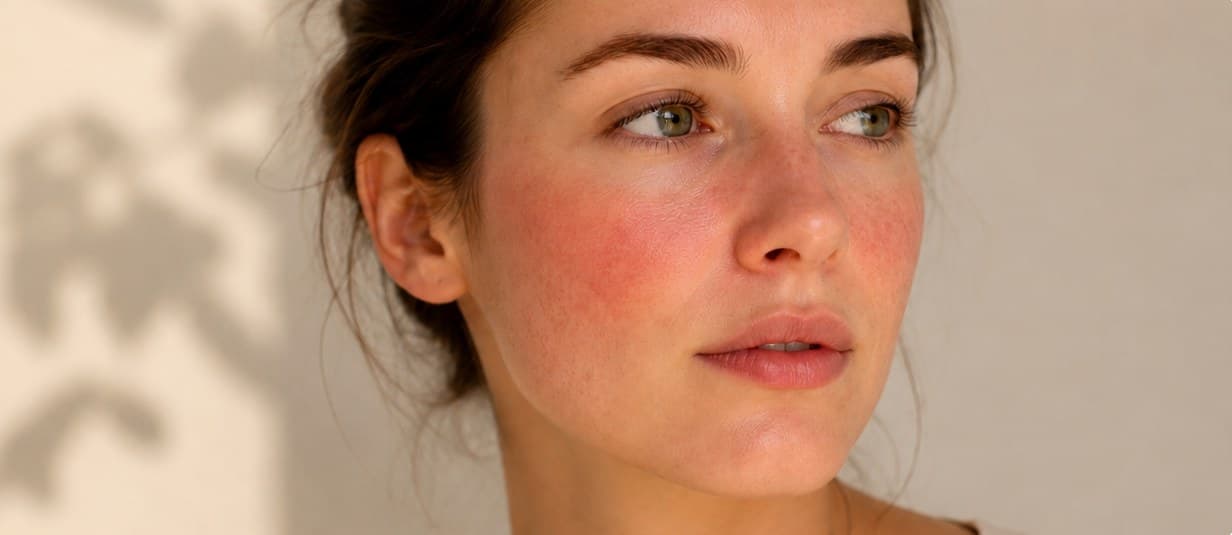
Understanding Rosacea: Symptoms & Triggers
Rosacea is a chronic inflammatory skin condition that causes persistent redness, flushing and sensitivity. There's no cure — but early recognition, gentle skincare and knowing your triggers can make a real difference.
Rosacea is a chronic inflammatory skin condition that primarily affects the face. It commonly causes persistent redness, flushing, visible blood vessels, and, in some people, acne-like bumps. While there is currently no cure, early recognition, gentle skincare, and appropriate treatment can help reduce flare-ups and improve the appearance and comfort of the skin.
Rosacea most often develops after the age of 30, although it can occur earlier. Symptoms vary from person to person and may change over time.
Common signs of rosacea
- Persistent facial redness, especially across the cheeks, nose, chin and forehead
- Flushing or blushing easily
- Visible broken capillaries (telangiectasia)
- Red bumps or pus-filled bumps that can resemble acne
- Burning, stinging, or increased skin sensitivity
- Dry, rough, or easily irritated skin
- Eye irritation or dryness (ocular rosacea)
- Thickening of the skin around the nose in advanced cases (rhinophyma), which is more common in men
What triggers rosacea?
Rosacea flare-ups are often triggered by environmental or lifestyle factors. While triggers differ for everyone, some of the most common include:
- Sun exposure
- Hot weather
- Cold wind
- Emotional stress
- Exercise
- Hot beverages
- Spicy foods
- Alcohol
- Fragranced skincare products
- Harsh exfoliants
- Certain medications
Learning your personal triggers is an important part of managing rosacea.
Who gets rosacea?
Rosacea affects an estimated 415 million people worldwide. It is seen in all skin tones but is diagnosed more frequently in fair-skinned adults. Women are diagnosed more often, although men may develop more severe changes if the condition progresses untreated.
Rosacea is not contagious, is not caused by poor hygiene, and cannot simply be washed away.
At Crow & Co.
At Crow & Co., we believe that understanding your skin is the first step toward caring for it. Rosacea can affect not only the appearance of your skin but also your confidence and quality of life.
Our approach focuses on supporting the skin barrier, minimizing irritation, identifying triggers, and recommending gentle skincare and professional treatments tailored to your individual needs.
Caring for rosacea-prone skin
Our nurse-led Rosacea Protocol is a gentle, barrier-first routine — cleanse, calm, defend and protect, morning and evening — with the products we recommend for sensitive, reactive skin.
Still have questions?
Book a consultation at Salmon Arm Aesthetics for personalized, nurse-led advice based on your skin, goals, and medical history.
Keep reading
All articlesThe Complete Guide to Acne: Myths, Mistakes and What Actually Works
Acne is one of the most common skin conditions in the world, and one of the most misunderstood. What causes it, what doesn't, and how to build a routine that works with your skin instead of against it.
Read articleSkincarePregnancy-Safe Skincare: What to Use and What to Avoid
Pregnancy hormones change how your skin behaves — oil, pigmentation, sensitivity and hydration all shift. Here's what's generally considered safe, what to avoid as a precaution, and why the advice online conflicts so often.
Read articleSkincareSleep & Skin: The Night Shift Your Skin Can't Afford to Miss
During the day your skin defends you. At night, those priorities shift to recovery. No product replaces a good night's sleep — but the right evening routine works with your skin's biology instead of against it.
Read article