
Morpheus8, Beyond the Hype: What RF Microneedling Really Does
Morpheus8 is one of the most sought-after RF microneedling treatments in aesthetics — and one of the most over-marketed. An honest, nurse-led look at how it works, what it genuinely treats, what it doesn't, and how it compares to HIFU.
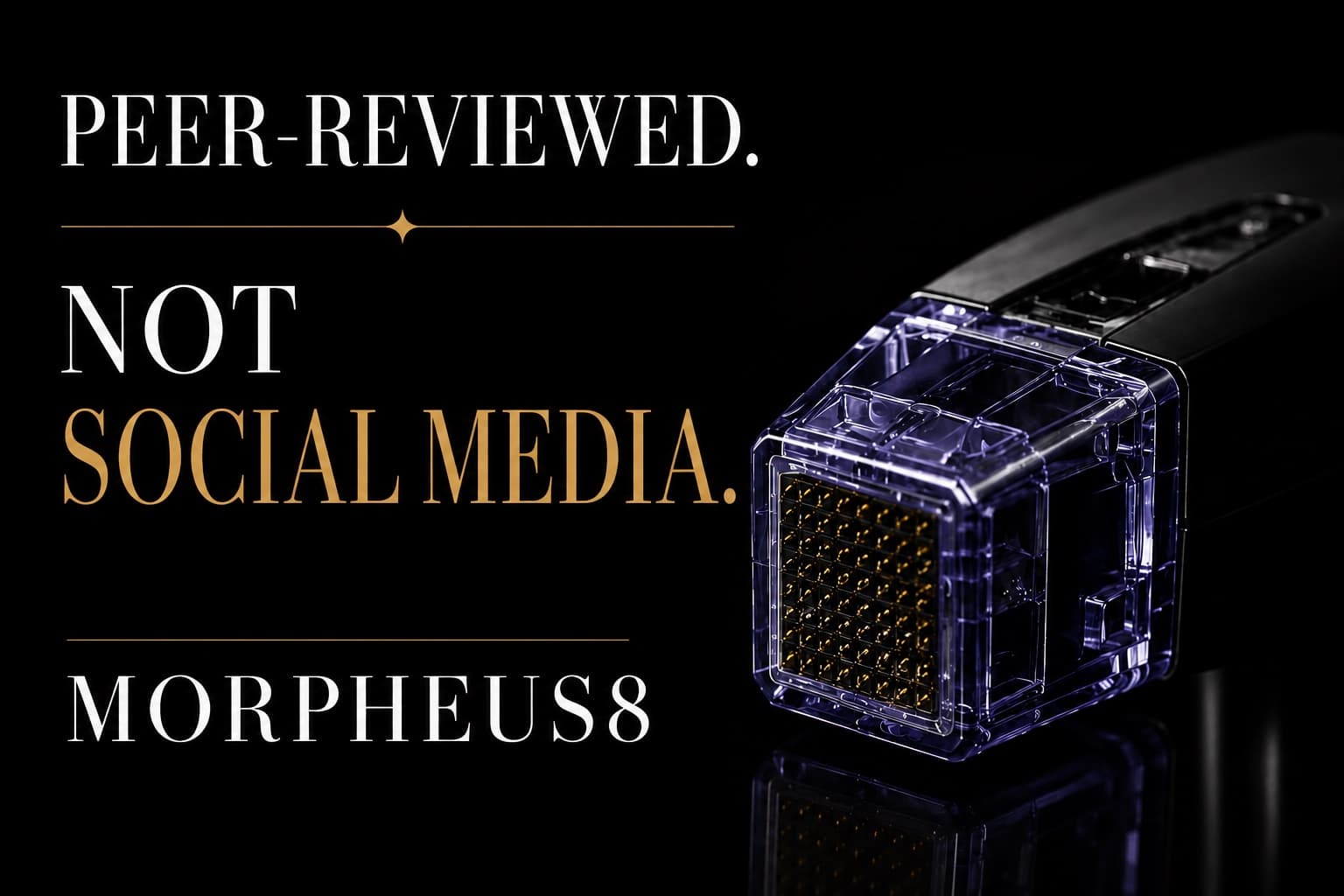
Morpheus8 is one of the most recognized radiofrequency (RF) microneedling treatments available today. It's also one of the most heavily marketed — which means it's worth separating what it genuinely does from what social media promises. It combines two technologies that have been used independently for years: microneedling, which creates tiny controlled injuries that trigger the body's natural wound-healing response, and radiofrequency energy, delivered through the tips of those needles to heat the deeper layers of the skin where collagen and elastin are produced.
The combination is more powerful than either treatment alone, because it stimulates both mechanical repair (the needles) and thermal remodeling (the RF energy).
How Morpheus8 works
Think of your skin like a mattress. The fabric is your epidermis; the padding and springs underneath are the collagen, elastin and connective tissue that give your face firmness. As we age, collagen production slows, elastin fibres become damaged, hyaluronic acid decreases, fat pads shift downward, and the skin becomes thinner and looser. Morpheus8 doesn't simply polish the surface — it treats beneath it.
- Step 1 — Tiny insulated needles penetrate the skin to adjustable depths. Unlike traditional microneedling, the goal isn't just creating tiny channels.
- Step 2 — Once the needles reach the desired depth, radiofrequency energy is released only from the needle tips, creating controlled heating within the dermis while minimizing heat at the skin's surface.
- Step 3 — Your body responds by producing new collagen and elastin, improving blood supply, reorganizing scar tissue, and tightening connective tissue.
Over weeks and months, the skin gradually becomes firmer and smoother. The most natural-looking improvements develop slowly as the skin rebuilds itself.
What Morpheus8 treats
- Skin laxity — one of its biggest strengths, helping soften early jowls, mild neck laxity, loose cheeks, and lower-face heaviness. It is not a replacement for a facelift.
- Fine lines and wrinkles — new collagen helps soften crow's feet, smile lines, forehead texture, and neck creases.
- Acne scars — one of the treatments with the strongest evidence; the needles break up scar tissue while RF stimulates collagen beneath depressed scars.
- Enlarged pores — pores can't literally shrink, but tightening the surrounding collagen makes them appear much smaller.
- Rough texture and crepey, uneven, or dull skin.
- Stretch marks and select body areas — larger handpieces can treat the abdomen, arms, thighs and knees.
What Morpheus8 does not do well
This is where marketing often overpromises. Morpheus8 is not the best treatment for significant skin sagging, deep pigmentation or melasma, broken capillaries, large amounts of excess skin, or dynamic wrinkles caused by muscle movement (those respond better to neuromodulators). Being honest about its limits is how you avoid disappointment — and how we decide whether it's genuinely the right treatment for you.
Morpheus8 vs. HIFU
These two treatments are often positioned as competitors, but they work at different depths and serve different goals. HIFU targets the SMAS layer — the deeper structural layer that surgeons lift during a facelift — so its primary goal is lifting and structural support. Morpheus8 targets the dermis and superficial fat, so its primary goal is skin tightening, collagen remodeling, texture improvement, and acne scars.
Think of it this way: HIFU lifts the foundation, and Morpheus8 rebuilds the walls and finishes. That's why many clinics combine them rather than viewing them as rivals.
Is it safe for all skin types?
One advantage of RF microneedling is that the energy is delivered below the skin surface, making it generally suitable for a wider range of skin tones than many lasers when used appropriately. However, treatment settings and provider experience remain critical. Although Morpheus8 has a strong track record, it is a medical procedure and not risk-free — improper settings or poor technique can increase the risk of burns, scarring, unwanted fat loss, pigment changes, or nerve injury. In 2025 the FDA issued a safety communication reminding providers and patients of these potential complications and emphasizing proper training and patient selection. That is exactly why we deliver it in a nurse-led clinical practice and start every plan with a consultation.
How many treatments — and what's the downtime?
- Texture: 1–3 sessions
- Acne scars: 3–6 sessions
- Skin tightening: 2–4 sessions
- Maintenance: about once per year, depending on age and skin quality
Collagen remodeling continues for several months after treatment. Most people experience redness for one to three days, mild swelling, a sandpaper-like texture for several days, and tiny grid or needle marks that usually fade within a week.
The bottom line
Morpheus8 is best thought of as a deep collagen-remodeling treatment, not simply a skin-tightening device. It stimulates collagen and elastin, improves skin texture, softens acne scars, refines pores, and tightens mild to moderate laxity — with the most natural-looking results developing gradually over several weeks to months. The ideal candidate has mild to moderate laxity, fine lines, acne scars, enlarged pores, rough texture, or early jowling, along with good overall skin health and realistic expectations. If that sounds like you, a consultation is the honest place to start.
Considering Morpheus8?
We offer Morpheus8 RF microneedling in a nurse-led clinical practice in Salmon Arm. Every plan starts with a consultation to confirm you're a good candidate and tailor the treatment to your skin.
Still have questions?
Book a consultation at Salmon Arm Aesthetics for personalized, nurse-led advice based on your skin, goals, and medical history.
Keep reading
All articlesHIFU vs. Surgical Facelift: What to Know
High-intensity focused ultrasound promises lifting and tightening without surgery. Here is an honest look at how it compares to a facelift, and who each option truly suits.
Read articleWellnessCan Zinc Make Botox Last Longer? An Honest, Nurse-Led Look
Botulinum toxin is itself a zinc-dependent enzyme, and some research suggests adequate zinc may help treatments last longer — particularly in people who are deficient. Here's what the science actually says, and what it doesn't.
Read articleWellnessFeeding Your Collagen: The Nutrients That Support HIFU Results
HIFU works by triggering your body's own collagen response over the months that follow — and that rebuilding depends on nutrition. These are the five nutrients we recommend to give your body the building blocks it needs.
Read article