
Why a Medical Foot Exam Matters
A foot care appointment is more than a trim and a polish. A nurse-led medical foot exam can catch circulation, nerve, and skin changes long before they become serious.
Your feet carry you through every day of your life, yet they are often the last part of the body to receive real attention. By the time most people seek help, a problem that began quietly — a numb patch, a thickening nail, a small wound that will not close — has had months or years to progress. A medical foot exam is designed to interrupt that timeline. It is a clinical assessment, performed by a licensed practical nurse, that looks at the whole picture of your foot health rather than simply tidying the surface.
What we are actually looking for
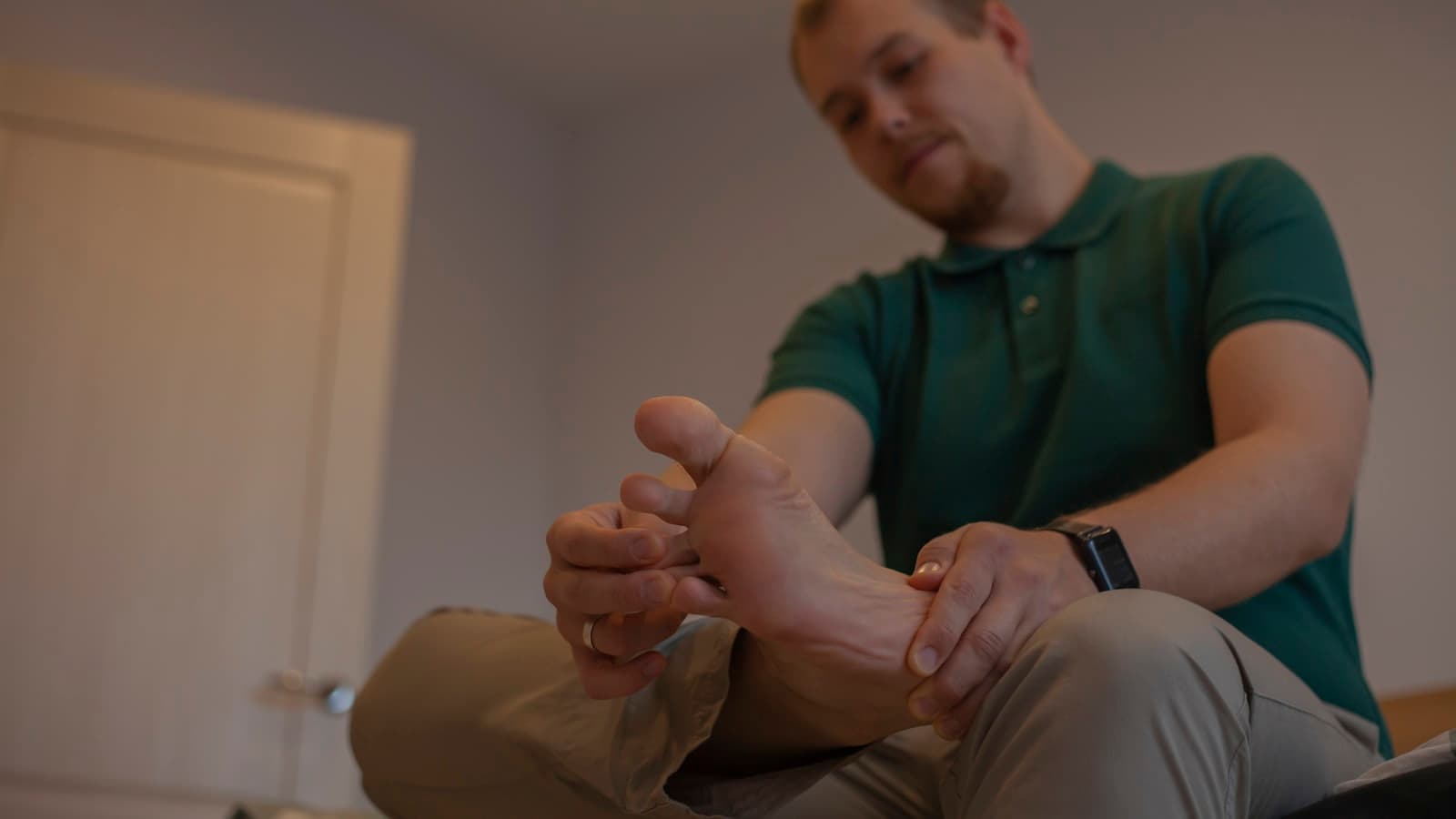
During a new client exam we chart your history and examine your feet the way a nurse examines any part of the body: methodically and with a reason behind every step. We assess circulation, sensation, skin integrity, nail health, foot structure, and footwear. Each of these tells a story, and together they reveal risk factors that are easy to miss in a quick pedicure.
- Circulation — checking pulses, skin temperature, and colour to flag reduced blood flow.
- Sensation — testing how well your nerves are protecting you from injury you cannot feel.
- Skin and nails — identifying fungal infection, corns, calluses, and early pressure damage.
- Structure and gait — noticing how bunions, hammertoes, or flat arches change where pressure lands.
- Footwear fit — because the right shoe prevents far more problems than any treatment can fix.
Why nurse-led care is different
A nurse does not stop at the foot. We connect what we see to your wider health — diabetes, peripheral vascular disease, autoimmune conditions, medications that thin the skin or affect healing. That context changes everything. A callus on a healthy foot is a minor nuisance; the same callus on a diabetic foot with reduced sensation can be the first stage of an ulcer. Knowing the difference, and charting it over time, is the heart of medical foot care.
Especially important if you live with diabetes
If you have diabetes, a yearly comprehensive foot exam is one of the most protective things you can do. Many serious complications — including infection and amputation — begin with small, preventable problems. Regular professional eyes on your feet mean those problems are found and managed while they are still small. We also teach you what to watch for at home, so the care continues between visits.
Insurance-friendly and often tax-deductible
Because this is nursing care with formal medical charting, your visit is frequently covered by extended health plans and may qualify as a tax-deductible medical expense. We provide the documentation you need to submit a claim. The result is care that protects both your feet and your budget.
If you have never had a proper foot assessment, or it has been more than a year, consider booking a New Client Foot Health Exam. An hour of careful attention now can spare you a great deal of trouble later.
Still have questions?
Book a consultation at Salmon Arm Aesthetics for personalized, nurse-led advice based on your skin, goals, and medical history.
Keep reading
All articlesCaring for Fungal Nails
Thick, yellow, crumbling nails are common and stubborn — but they are treatable. A practical, nurse-led guide to recognising, managing, and preventing fungal nail infections.
Read articleWellnessCan Zinc Make Botox Last Longer? An Honest, Nurse-Led Look
Botulinum toxin is itself a zinc-dependent enzyme, and some research suggests adequate zinc may help treatments last longer — particularly in people who are deficient. Here's what the science actually says, and what it doesn't.
Read articleWellnessFeeding Your Collagen: The Nutrients That Support HIFU Results
HIFU works by triggering your body's own collagen response over the months that follow — and that rebuilding depends on nutrition. These are the five nutrients we recommend to give your body the building blocks it needs.
Read article