
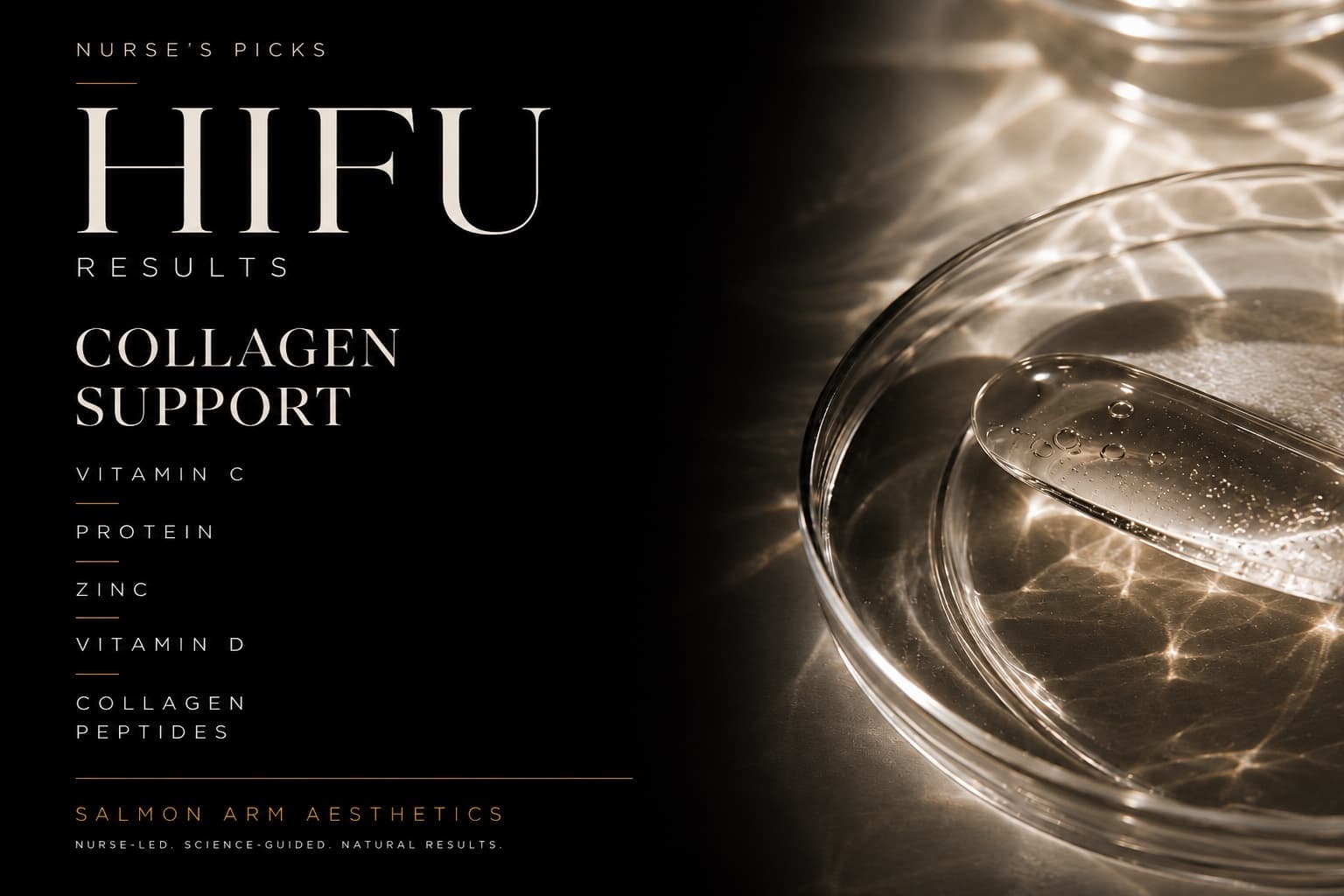
Feeding Your Collagen: The Nutrients That Support HIFU Results
HIFU works by triggering your body's own collagen response over the months that follow — and that rebuilding depends on nutrition. These are the five nutrients we recommend to give your body the building blocks it needs.
HIFU stimulates your body's natural wound-healing response, which includes new collagen production. That process unfolds over the three to six months after your treatment — and collagen synthesis depends on adequate nutrition. These are the nutrients we recommend, because each plays an established role in collagen formation, tissue repair, or skin health. No supplement can guarantee a treatment outcome, but giving your body the raw materials it needs is one of the few things genuinely within your control after you leave the treatment room.
Vitamin C
Vitamin C is an essential cofactor for the enzymes prolyl hydroxylase and lysyl hydroxylase, which stabilize and strengthen collagen fibres during synthesis. Without adequate vitamin C, normal collagen formation is impaired.
- Essential for collagen synthesis
- Required for wound healing
- A potent antioxidant that helps protect collagen from oxidative stress
Protein
Collagen is a structural protein built primarily from amino acids including glycine, proline, and hydroxyproline. Adequate dietary protein provides the amino acids required for collagen production and tissue repair.
- Required for collagen synthesis
- Supports tissue regeneration
- Important for healing after procedures
Zinc
Zinc is required for DNA synthesis, protein synthesis, cell division, and numerous enzymes involved in tissue repair. It also contributes to normal immune function and wound healing.
- Supports normal wound healing
- Required for protein synthesis
- Supports connective tissue repair
- Important for healthy skin
Vitamin D
Vitamin D helps regulate the immune function and inflammatory responses involved in normal healing. Deficiency is common in Canada, particularly through the winter months.
- Supports immune regulation
- Contributes to a normal inflammatory response
- Supports overall skin health
Collagen peptides
Collagen peptides provide amino acids commonly found in connective tissue. Clinical studies suggest oral collagen supplementation may improve skin hydration and elasticity when taken consistently over several months.
- A source of collagen-specific amino acids
- May improve skin elasticity
- May improve skin hydration
- Supports connective tissue maintenance
Why these five?
These nutrients were chosen because they have established physiological roles in collagen synthesis, tissue repair, wound healing, skin integrity, and connective tissue maintenance. While no supplement can guarantee your results, ensuring adequate nutritional support gives your body the building blocks it needs for normal healing and collagen production during the window when it's doing the real work.
This article is general education, not medical advice, and no product is intended to diagnose, treat, cure or prevent any disease. If you are pregnant or breastfeeding, taking any medication, or managing a health condition such as diabetes, please speak with your physician or pharmacist before starting anything new.
Support your recovery through Nurse's Picks
The Recovery After HIFU collection in Nurse's Picks brings these building blocks together in one place, available through Karilee's practitioner-only Fullscript dispensary. Ask her which are right for you at your next visit.
Still have questions?
Book a consultation at Salmon Arm Aesthetics for personalized, nurse-led advice based on your skin, goals, and medical history.
Keep reading
All articlesCan Zinc Make Botox Last Longer? An Honest, Nurse-Led Look
Botulinum toxin is itself a zinc-dependent enzyme, and some research suggests adequate zinc may help treatments last longer — particularly in people who are deficient. Here's what the science actually says, and what it doesn't.
Read articleAestheticsMorpheus8, Beyond the Hype: What RF Microneedling Really Does
Morpheus8 is one of the most sought-after RF microneedling treatments in aesthetics — and one of the most over-marketed. An honest, nurse-led look at how it works, what it genuinely treats, what it doesn't, and how it compares to HIFU.
Read articleSkincareThe Complete Guide to Acne: Myths, Mistakes and What Actually Works
Acne is one of the most common skin conditions in the world, and one of the most misunderstood. What causes it, what doesn't, and how to build a routine that works with your skin instead of against it.
Read article