
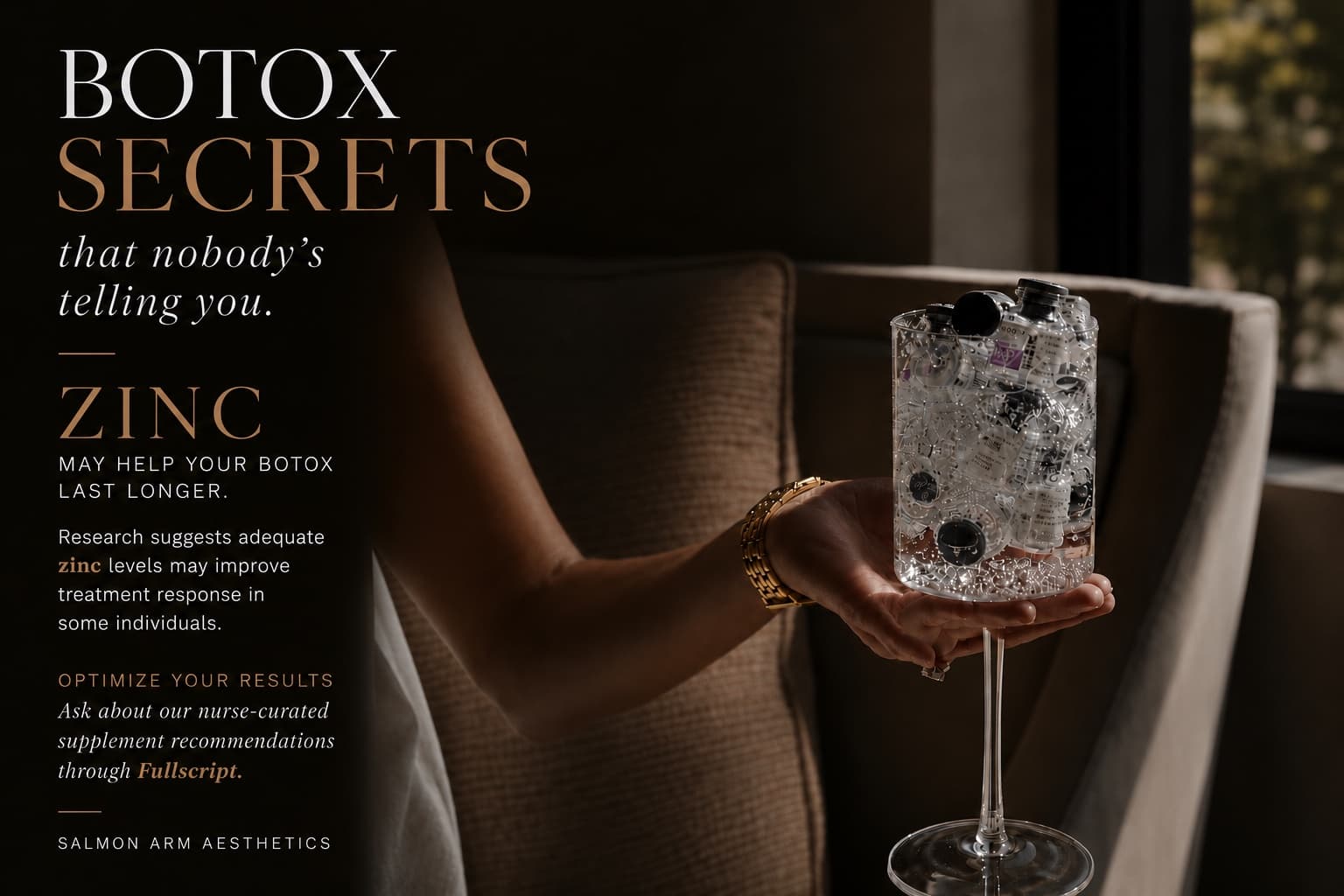
Can Zinc Make Botox Last Longer? An Honest, Nurse-Led Look
Botulinum toxin is itself a zinc-dependent enzyme, and some research suggests adequate zinc may help treatments last longer — particularly in people who are deficient. Here's what the science actually says, and what it doesn't.
When people think about getting Botox®, they usually focus on choosing the right provider, the number of units they'll need, or how long their results will last. But there's another factor that often gets overlooked — your body's nutritional status. One nutrient receiving increasing attention in the scientific community is zinc. Zinc isn't a magic solution, but emerging research suggests it may play a role in how well botulinum toxin treatments work for some individuals.
Why zinc?
Botulinum toxin works by temporarily relaxing targeted muscles. What many people don't realize is that the toxin itself is a zinc-dependent enzyme. In simple terms, zinc is involved in the molecular process that allows the toxin to block the nerve signals responsible for muscle movement. Without this mechanism, the treatment wouldn't work as intended.
This doesn't necessarily mean that taking extra zinc will improve everyone's results. But it does provide a scientific reason why adequate zinc levels may be important — particularly in individuals who are deficient.
What does the research say?
The evidence is encouraging, but it's important to separate science from marketing.
- Botulinum toxin is a zinc-dependent protein. Researchers have long understood that the toxin requires zinc as part of its biological mechanism of action. This is well established in the biochemical literature and forms the scientific basis for investigating zinc supplementation.
- A clinical trial showed promising results. In a randomized, double-blind, placebo-controlled study, participants who received zinc citrate combined with phytase experienced a longer duration of treatment effects compared with placebo — many saw their results last roughly 30% longer. It was, however, a relatively small study, and more research is needed before broad recommendations can be made.
- A 2023 systematic review concluded that early research suggests zinc supplementation may improve treatment longevity in some individuals, that the current evidence is promising but still limited, and that more high-quality clinical trials are needed before zinc becomes a routine recommendation for every Botox patient.
This is exactly how evidence-based medicine should work — following the science while honestly recognizing its limitations.
More isn't always better
One common misconception is that if some zinc is good, more must be better. That's simply not true. Excessive zinc supplementation can interfere with copper absorption and may lead to other health concerns over time. Supplementation should always be individualized based on your health history, dietary intake, medications, and overall nutritional status. Quality matters just as much as dosage.
Our approach at Salmon Arm Aesthetics
We believe exceptional aesthetic outcomes don't begin with the injection — they begin with supporting your body as a whole. That's why we take a science-guided, evidence-informed approach to treatment planning. For clients interested in optimizing their results, we offer personalized wellness and supplement recommendations through Fullscript, a professional-grade dispensary. Rather than recommending supplements indiscriminately, we consider your individual health goals and whether nutritional support may be appropriate for you.
The bottom line
Can zinc make Botox last longer? Maybe — for some people. The current evidence suggests that adequate zinc status may help optimize botulinum toxin response, particularly in individuals who have insufficient zinc intake. But zinc is not a guarantee of longer-lasting results, and more research is still needed.
The most important factors remain a qualified injector, appropriate dosing and technique, following your post-treatment instructions, and supporting your overall health through good nutrition. Sometimes the best aesthetic results come from paying attention to what happens before your appointment — not just during it.
References
- Brin MF, et al. Botulinum toxin and zinc: a randomized, double-blind clinical study. Journal of Drugs in Dermatology, 2012.
- Patel J, et al. Nutritional supplementation and botulinum toxin outcomes: a systematic review. Journal of Plastic, Reconstructive & Aesthetic Surgery Open, 2023.
- Simpson LL. The origin, structure, and pharmacological activity of botulinum toxin. Reviews in Biochemistry and Neurotoxicology.
This article is general education, not medical advice. Supplements can interact with prescription medication. If you are pregnant or breastfeeding, taking any medication, or managing a health condition, please speak with your physician or pharmacist before starting anything new.
Optimising your results from the inside
Adequate nutrition is one of the quiet factors behind good aesthetic outcomes. Nurse's Picks is Karilee's curated selection of professional-grade supplements, available through her practitioner-only Fullscript dispensary — chosen for real clients, not for margin.
Still have questions?
Book a consultation at Salmon Arm Aesthetics for personalized, nurse-led advice based on your skin, goals, and medical history.
Keep reading
All articlesFeeding Your Collagen: The Nutrients That Support HIFU Results
HIFU works by triggering your body's own collagen response over the months that follow — and that rebuilding depends on nutrition. These are the five nutrients we recommend to give your body the building blocks it needs.
Read articleAestheticsMorpheus8, Beyond the Hype: What RF Microneedling Really Does
Morpheus8 is one of the most sought-after RF microneedling treatments in aesthetics — and one of the most over-marketed. An honest, nurse-led look at how it works, what it genuinely treats, what it doesn't, and how it compares to HIFU.
Read articleSkincareThe Complete Guide to Acne: Myths, Mistakes and What Actually Works
Acne is one of the most common skin conditions in the world, and one of the most misunderstood. What causes it, what doesn't, and how to build a routine that works with your skin instead of against it.
Read article