
Foot concern
Diabetic feet
Why foot care with diabetes is a medical matter rather than a cosmetic one, and what safe care actually looks like.
What it actually is
Diabetes can affect the feet in two ways that compound each other: reduced sensation, so an injury isn't felt, and reduced circulation, so it heals slowly. The result is that a small problem — a blister, a callus, a nick from nail clippers — can develop further than it would otherwise before anyone notices. This is why routine foot care with diabetes is treated as preventive healthcare, not pampering.
Why it happens
- Peripheral neuropathy reducing sensation, so injuries go unnoticed
- Reduced blood flow slowing healing
- Higher infection risk once skin is broken
- Changes in foot shape and pressure distribution over time
- Difficulty reaching or seeing your own feet to check them
What tends not to work
The most important myth is that any esthetician can safely do diabetic foot care. Instrument sterilization, recognising early skin breakdown, and knowing which findings need a physician rather than a treatment are all clinical judgements. A provider who treats a diabetic foot exactly as they'd treat anyone else's is the actual risk.
How we approach it
Care is nurse-led and documented. Each visit includes a look at skin integrity, nail condition, circulation and pressure areas, with notes kept so changes between visits are visible rather than guessed at. Nails and calluses are managed with sterile instruments — this clinic uses a Class B autoclave, the standard used in dental and surgical settings. Anything that looks like it needs a physician gets referred rather than treated.
When to see a doctor instead
Contact your physician or diabetes team promptly for any new ulcer, break in the skin that isn't healing, redness or warmth spreading up the foot, sudden colour change, or new numbness. With diabetes these are urgent, not wait-and-see.
From our journal
Trusted sources
Treatment
How we treat diabetic feet
Every treatment is performed by Karilee Slubowski, LPN.
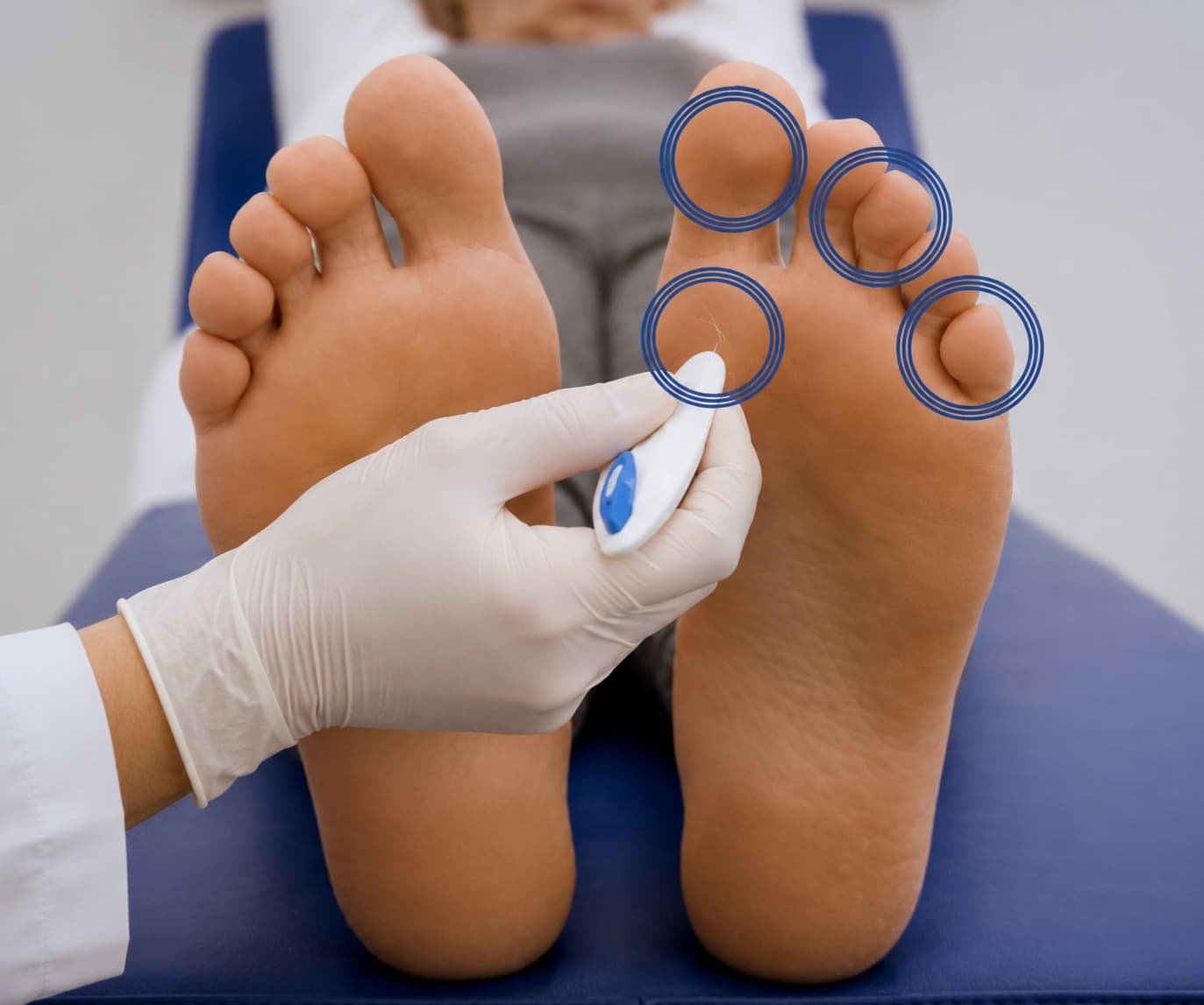
Diabetic Foot Care
Gentle, specialized foot care for people living with diabetes — protecting against ulcers, infection, and complications from reduced circulation and sensation.
New Client Foot Health Exam & Med-Charting
A complete medical foot health assessment with nursing charting and a personalized care plan. Insurance-friendly and may be tax-deductible.
Follow-Up Treatment
Ongoing foot care for returning clients, building on your established care plan.
Between visits
Home care
What Karilee recommends using at home to hold the result between appointments.

Questions
Diabetic feet — common questions
- How often should a diabetic have their feet checked?
- Most people benefit from professional foot care every six to twelve weeks, alongside their regular diabetes reviews, though your physician may advise more often depending on your circulation and sensation. Checking your own feet daily is recommended between visits.
- Why does sterilization matter so much for diabetic foot care?
- Because the consequence of an introduced infection is far greater when circulation and sensation are reduced. Instruments should be sterilized in an autoclave between clients — not simply wiped or soaked in disinfectant.
- Is nursing foot care covered by insurance?
- Many extended-health plans include nursing foot care, and it may be claimable as a medical expense. Coverage varies by plan — you'll be given a receipt with the details your insurer needs.
Not sure if this is what you have?
That’s what an assessment is for. Karilee Slubowski, LPNwill tell you what you’re actually dealing with — including when the answer is that you should see your physician instead.
Related: Fungal toenails, Heel pain, Ingrown toenails