
Foot concern
Heel pain
Plantar fasciitis
Sharp heel pain on your first steps in the morning is the classic pattern — here's why it happens and what actually shifts it.
What it actually is
The plantar fascia is a thick band of tissue running along the sole from heel to toes. When it's irritated, the hallmark is pain on the first few steps after rest — getting out of bed, or standing up after sitting — which eases as you move and then returns later in the day. It is one of the most common causes of persistent heel pain, and one of the most commonly ignored, because it improves enough each morning to be tolerable.
Why it happens
- Long hours standing or walking on hard floors — trades, nursing, hospitality, retail
- A sudden increase in activity, or new footwear with different support
- Tight calf muscles, which increase the load the fascia carries
- Weight change, pregnancy, or anything that alters how you load the foot
What tends not to work
A heel spur seen on an X-ray is usually a consequence, not the cause — plenty of people have spurs and no pain at all, so removing the spur isn't the obvious fix it sounds like. Equally, 'resting until it settles' rarely resolves it on its own, because the tissue tends to stiffen with rest and get re-irritated the moment normal activity resumes.
How we approach it
Radial shockwave therapy is the main tool here. It delivers acoustic pressure waves into the tissue to stimulate a fresh healing response in an area that has stopped repairing itself properly, and it doesn't require a referral, injections or surgery. It's typically done as a short series rather than a single visit, and it works best combined with the boring parts — calf stretching and sensible footwear — which you'll be shown at the appointment.
When to see a doctor instead
See your physician promptly if the heel pain followed a specific injury or a sudden 'pop', if you can't bear weight, or if there's numbness, pins and needles, or pain that's worse at night and unrelated to activity — those point somewhere other than plantar fasciitis.
From our journal
Trusted sources
- Plantar fasciitis (NHS)
Treatment
How we treat heel pain
Every treatment is performed by Karilee Slubowski, LPN.
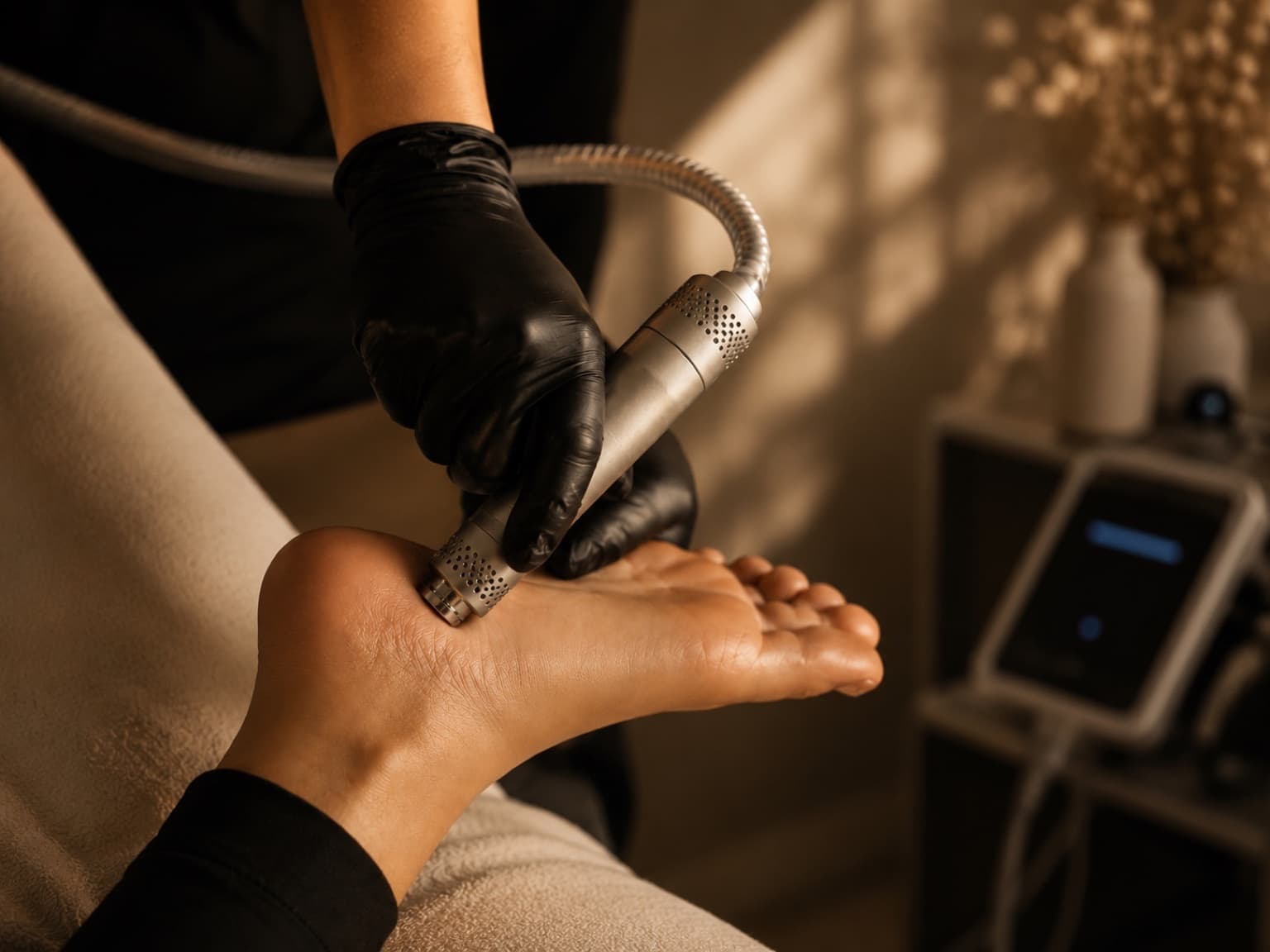
Radial Shockwave Therapy
Acoustic-wave therapy to relieve plantar fasciitis, heel pain, and chronic soft-tissue conditions.
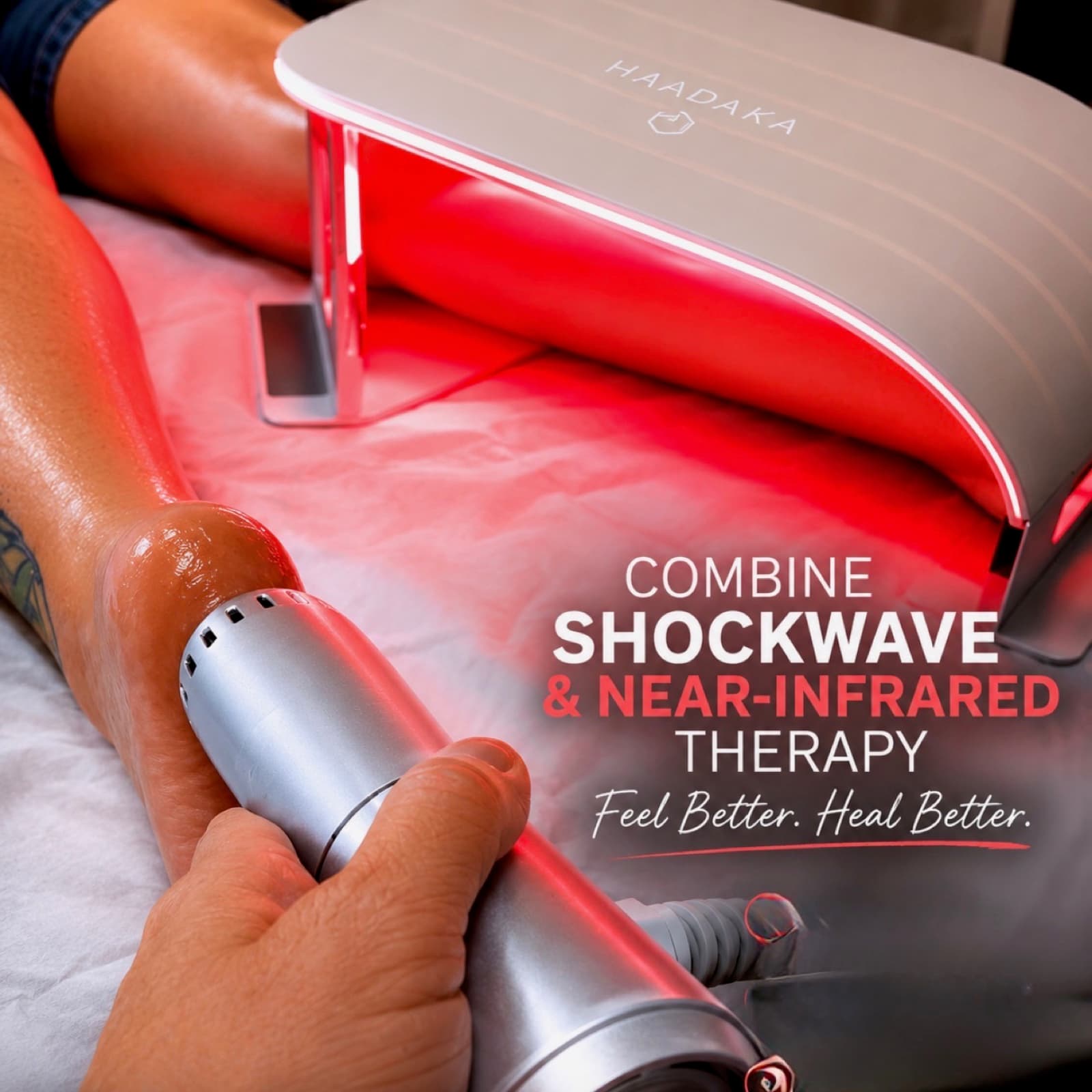
Additional Radial Shockwave Therapy
Subsequent shockwave therapy session within a treatment course.
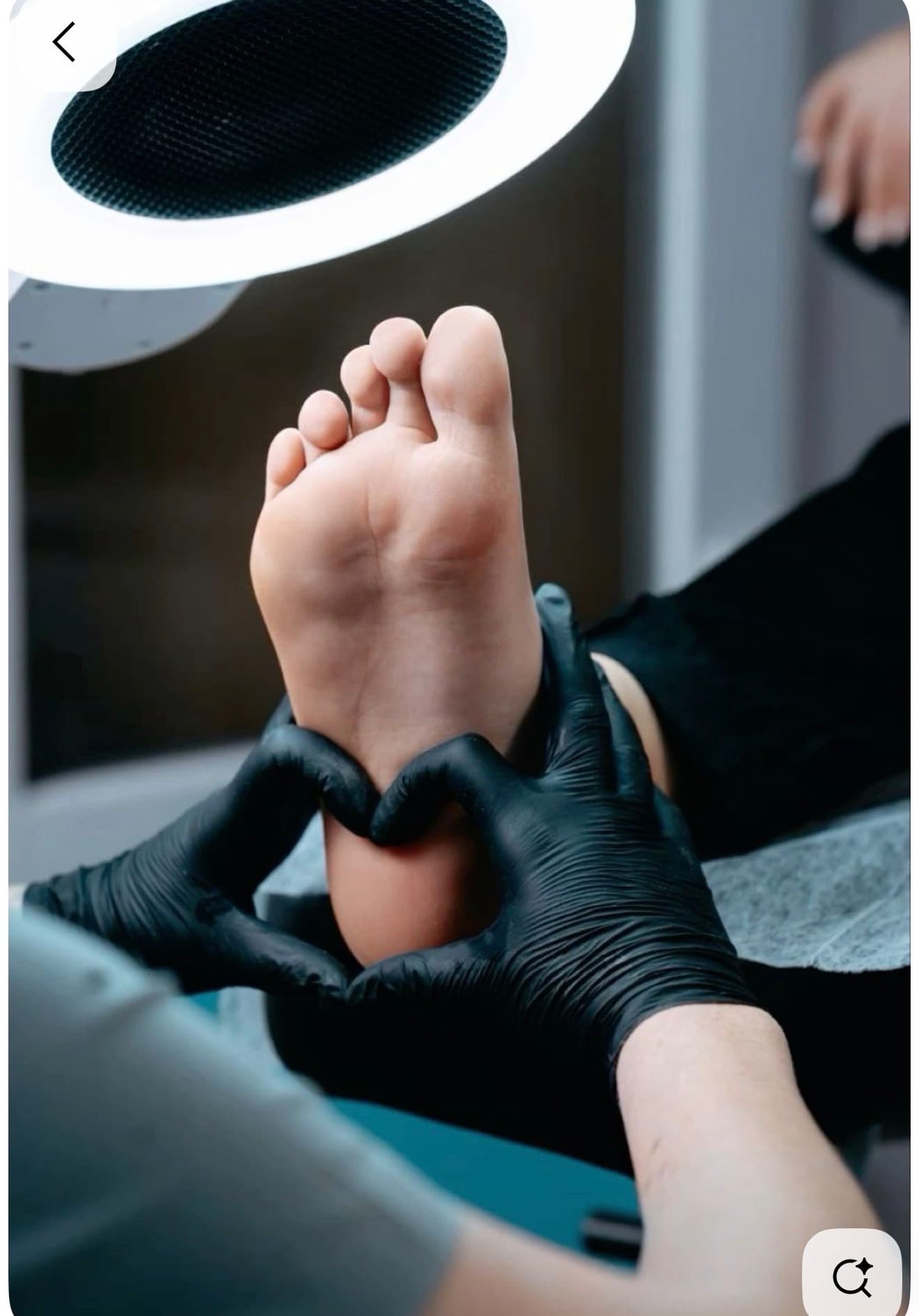
New Client Foot Health Exam & Med-Charting
A complete medical foot health assessment with nursing charting and a personalized care plan. Insurance-friendly and may be tax-deductible.
Questions
Heel pain — common questions
- Why does my heel hurt most first thing in the morning?
- The fascia shortens overnight while you're off your feet. Your first steps stretch it abruptly, which is what produces that sharp, localised pain. It easing after a few minutes of walking is the classic plantar fasciitis pattern.
- Do I need a doctor's referral for shockwave therapy?
- No. You can book radial shockwave therapy directly at the clinic. If there's any sign the problem is something other than plantar fasciitis, you'll be told to see your physician first.
- How many shockwave sessions will I need?
- It's normally a short series rather than a one-off, with sessions spaced about a week apart. The exact number depends on how long you've had it and how it responds — that's discussed at your assessment rather than guessed in advance.
Not sure if this is what you have?
That’s what an assessment is for. Karilee Slubowski, LPNwill tell you what you’re actually dealing with — including when the answer is that you should see your physician instead.
Related: Fungal toenails, Ingrown toenails, Plantar warts