
Foot concern
Fungal toenails
Onychomycosis
Thick, yellow, crumbling toenails that don't improve with over-the-counter treatment — what's actually going on, and what genuinely helps.
What it actually is
A fungal nail infection lives in and under the nail plate, not on top of it. That's the whole problem: the nail is a shield, and most topical treatments can't get past it in any meaningful concentration. The nail typically thickens, turns yellow or brown, separates from the nail bed, and crumbles at the edge. It's usually painless at first, which is why most people leave it for years.
Why it happens
- Warm, damp footwear — work boots, ski boots, sports shoes worn for long hours
- Shared wet floors: pools, gyms, change rooms, houseboats and shared showers
- An old nail injury that let fungus in under the plate
- Reduced circulation, which slows the nail's ability to defend itself
- Nail tools that weren't properly sterilized between clients
What tends not to work
Over-the-counter paints and home remedies very rarely clear an established infection, because they can't reach the infection site under the nail. Filing the top of the nail makes it look better temporarily while the infection continues underneath. If a nail has been treated for a year with no change, the treatment isn't reaching it.
How we approach it
Assessment comes first — several things mimic fungal nails, including psoriasis, trauma and simple age-related thickening, and treating the wrong thing wastes months. Where it is fungal, laser treatment targets the infection through the nail plate, and the thickened nail is reduced so it's comfortable and so treatment can reach further. Nails grow slowly: a toenail takes roughly nine to twelve months to replace itself, so progress is measured in new clear growth from the base, not in how the old nail looks.
When to see a doctor instead
See your physician if you are diabetic, immunosuppressed, or if the skin around the nail is red, hot, swollen or discharging — that suggests a bacterial infection, which is a different and more urgent problem than a fungal nail.
From our journal
Trusted sources
- Fungal nail infection (NHS)
Treatment
How we treat fungal toenails
Every treatment is performed by Karilee Slubowski, LPN.
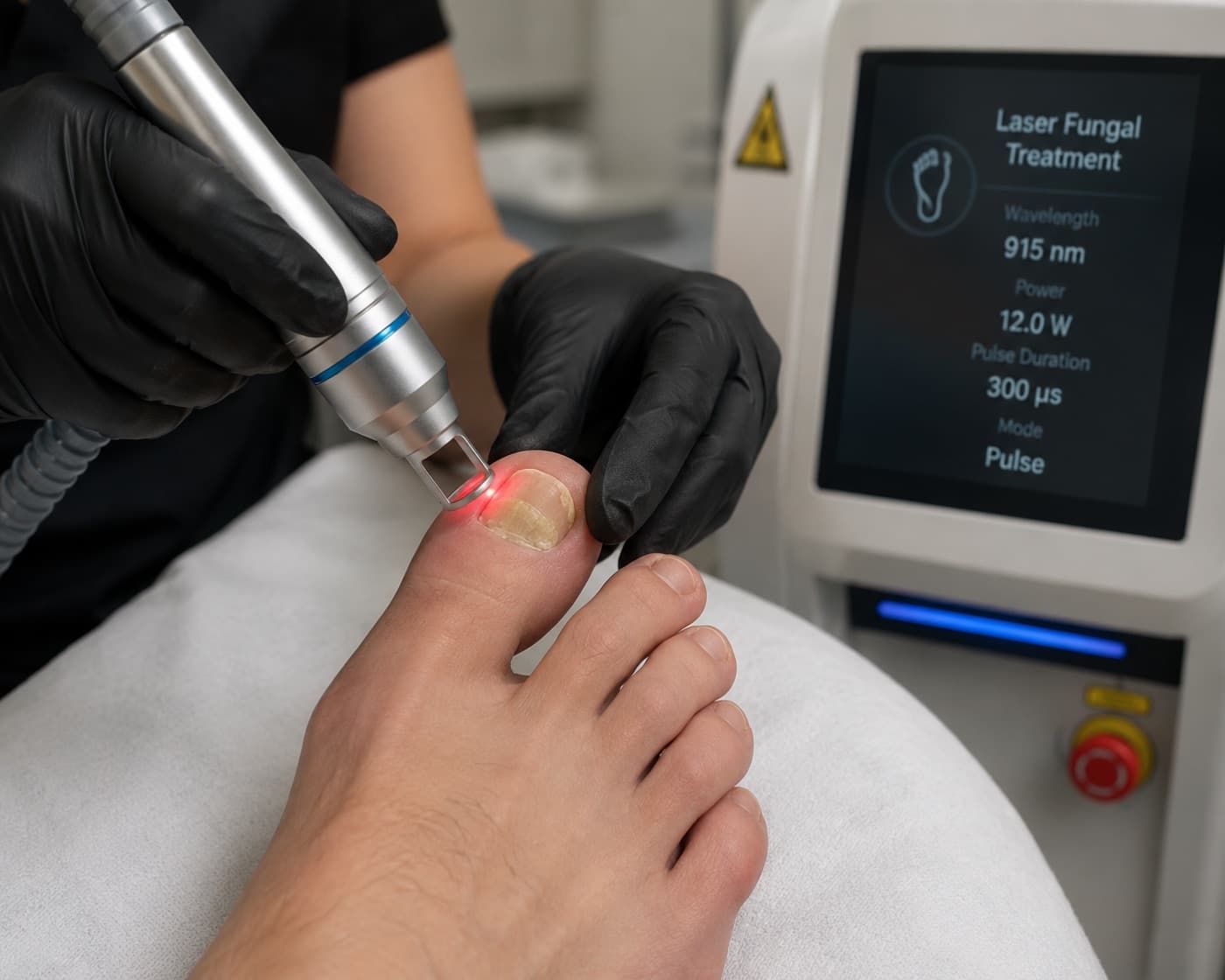
Fungal Toenail Laser Treatment
Laser treatment for fungal toenail infections (onychomycosis) — clearing the fungus and restoring healthy nail appearance.
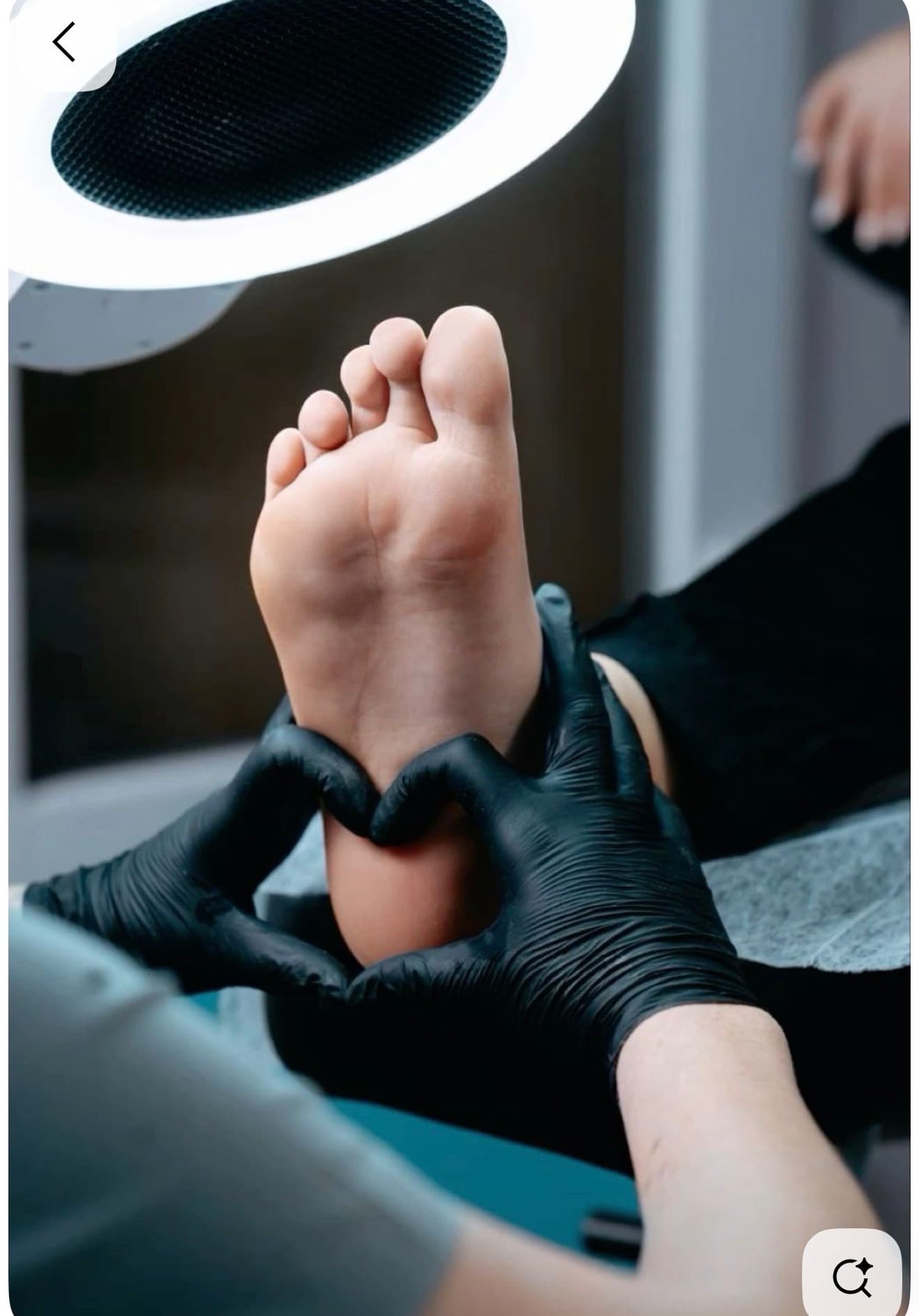
New Client Foot Health Exam & Med-Charting
A complete medical foot health assessment with nursing charting and a personalized care plan. Insurance-friendly and may be tax-deductible.
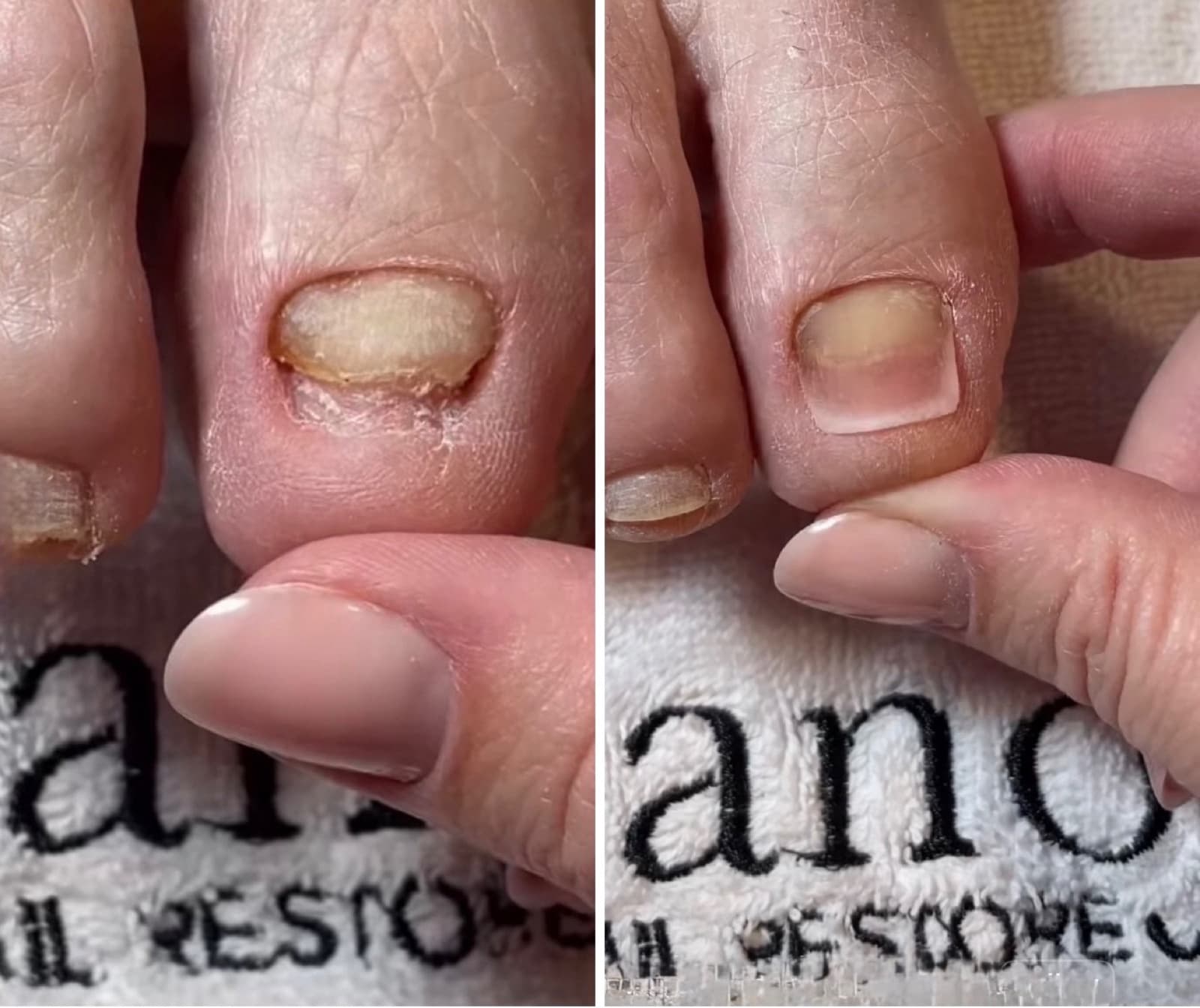
Nail Restoration & Reconstruction
A sophisticated solution for damaged or compromised nails — rebuilding a natural-looking, protective nail while your own grows back.
Between visits
Home care
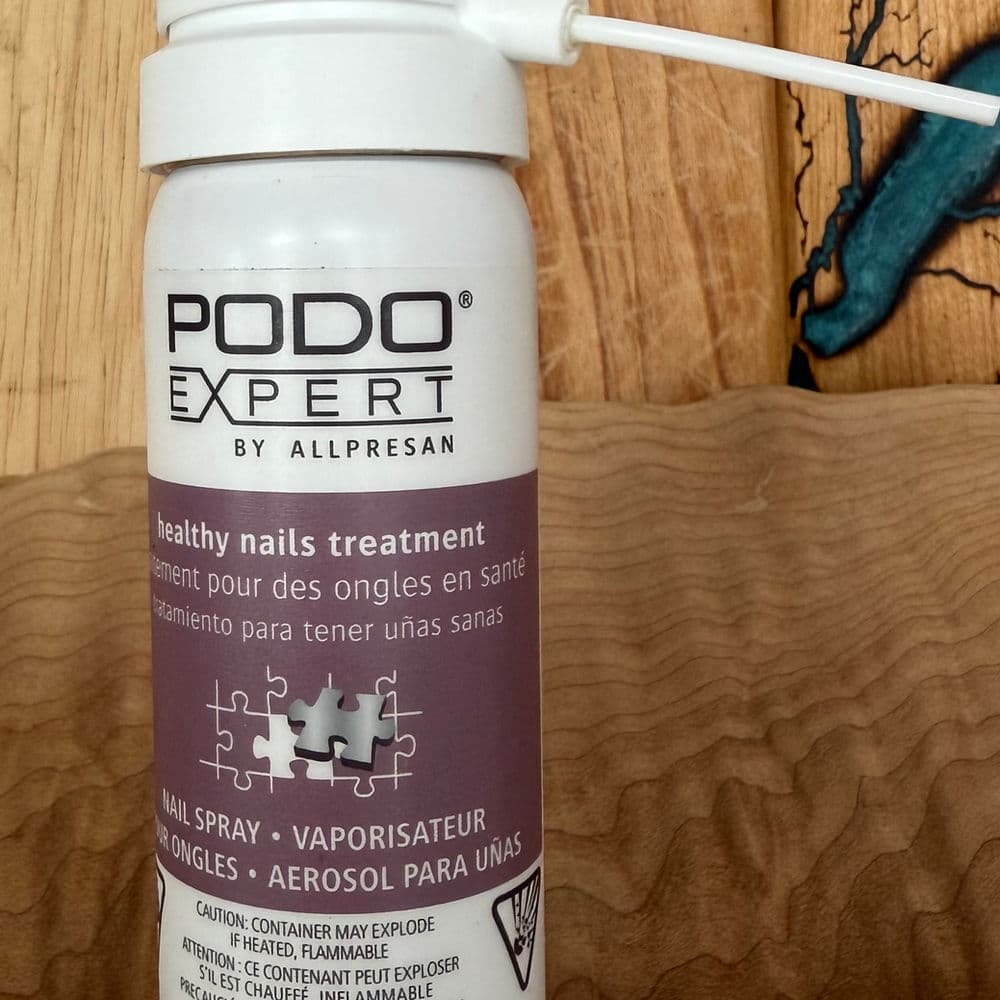
What Karilee recommends using at home to hold the result between appointments.
Questions
Fungal toenails — common questions
- How long does it take to clear a fungal toenail?
- Longer than most people expect. The infected nail doesn't recover — it has to grow out and be replaced, and a toenail takes roughly nine to twelve months to fully replace itself. You should see clear new growth at the base well before the nail looks normal overall.
- Will it come back?
- It can, particularly if the original source is still in play — the same boots, the same shared shower, or nail tools that aren't properly sterilized. Managing that alongside the treatment matters as much as the treatment itself.
- Is laser treatment for fungal nails painful?
- Most people describe a warming sensation rather than pain. It's generally well tolerated and doesn't require anaesthetic or downtime.
Not sure if this is what you have?
That’s what an assessment is for. Karilee Slubowski, LPNwill tell you what you’re actually dealing with — including when the answer is that you should see your physician instead.
Related: Heel pain, Ingrown toenails, Plantar warts