
Foot concern
Plantar warts
Verruca plantaris
Painful, stubborn warts on the sole of the foot — why they're so persistent and what's involved in clearing them.
What it actually is
A plantar wart is a viral infection of the skin caused by HPV. On the sole, body weight pushes it inward rather than letting it grow outward, so it forms a hard, flat, often painful lesion that people frequently mistake for a callus or a stone bruise. A useful distinguishing sign: a callus hurts when you press straight down, a wart tends to hurt more when you squeeze it side to side.
Why it happens
- Direct contact with the virus on wet communal floors — pools, change rooms, showers
- Small breaks in the skin, which give the virus a way in
- Sharing towels or footwear
- A period of lowered immunity, which is why they often appear in clusters
What tends not to work
Warts are viral, so filing one down only removes the overlying skin — the virus remains and it regrows. They can resolve on their own, but that can take a year or more, and in the meantime they spread and multiply. Repeated home acid treatments often damage the surrounding healthy skin without ever reaching the base.
How we approach it
Assessment first, because plantar warts and calluses are genuinely easy to confuse and the treatments are completely different. Laser treatment targets the blood supply feeding the wart. More than one session is usually needed, and clearance isn't guaranteed in any single treatment — that's the honest picture with warts regardless of the method used.
When to see a doctor instead
See your physician if you are diabetic or immunosuppressed, if a lesion bleeds spontaneously, changes colour, or grows quickly — anything on the foot that changes rapidly should be looked at by a doctor rather than assumed to be a wart.
From our journal
Trusted sources
- Warts and verrucas (NHS)
Treatment
How we treat plantar warts
Every treatment is performed by Karilee Slubowski, LPN.
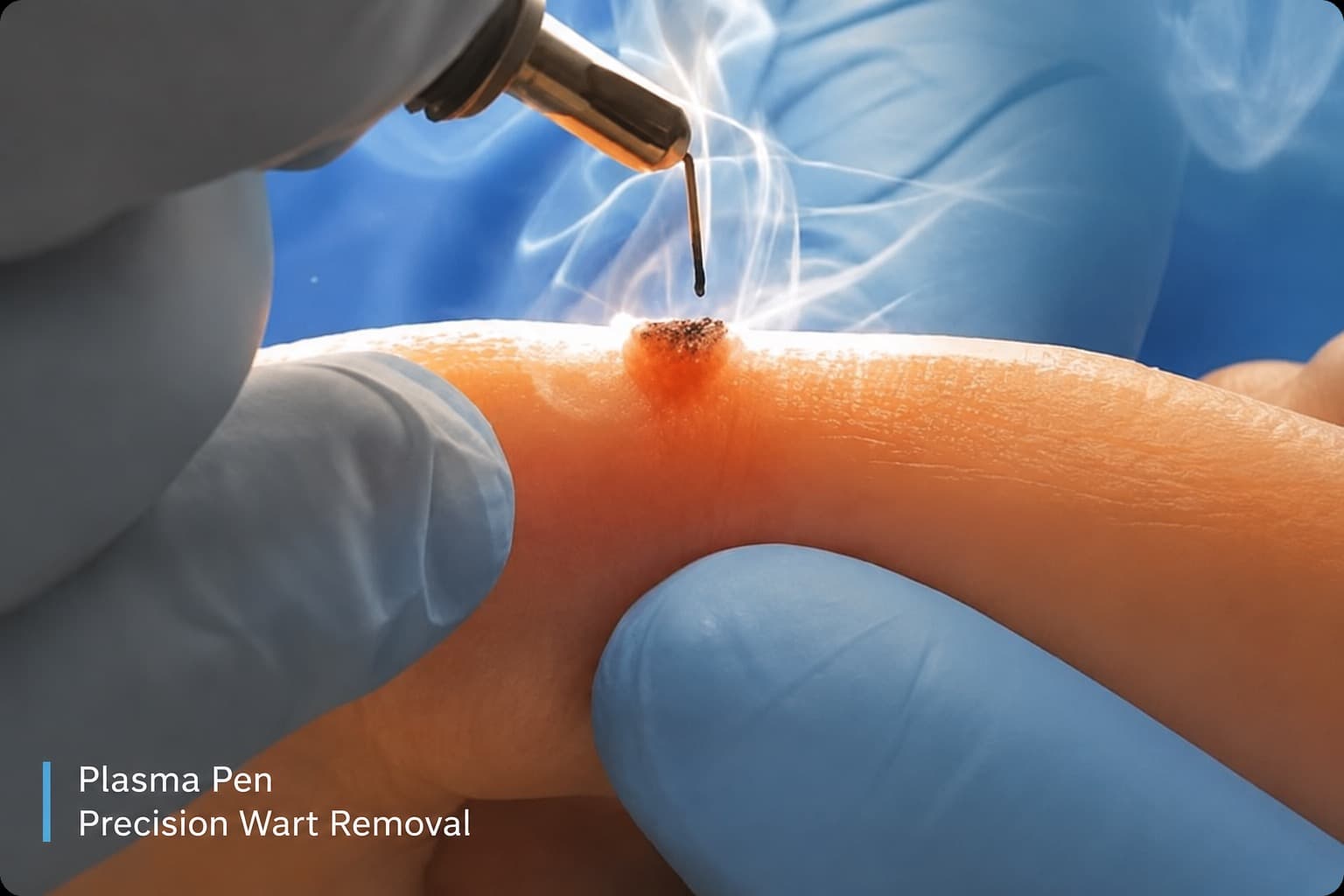
Plasma Pen Wart Removal (Foot & Hand)
Precise plasma pen removal of plantar and hand warts with minimal discomfort.
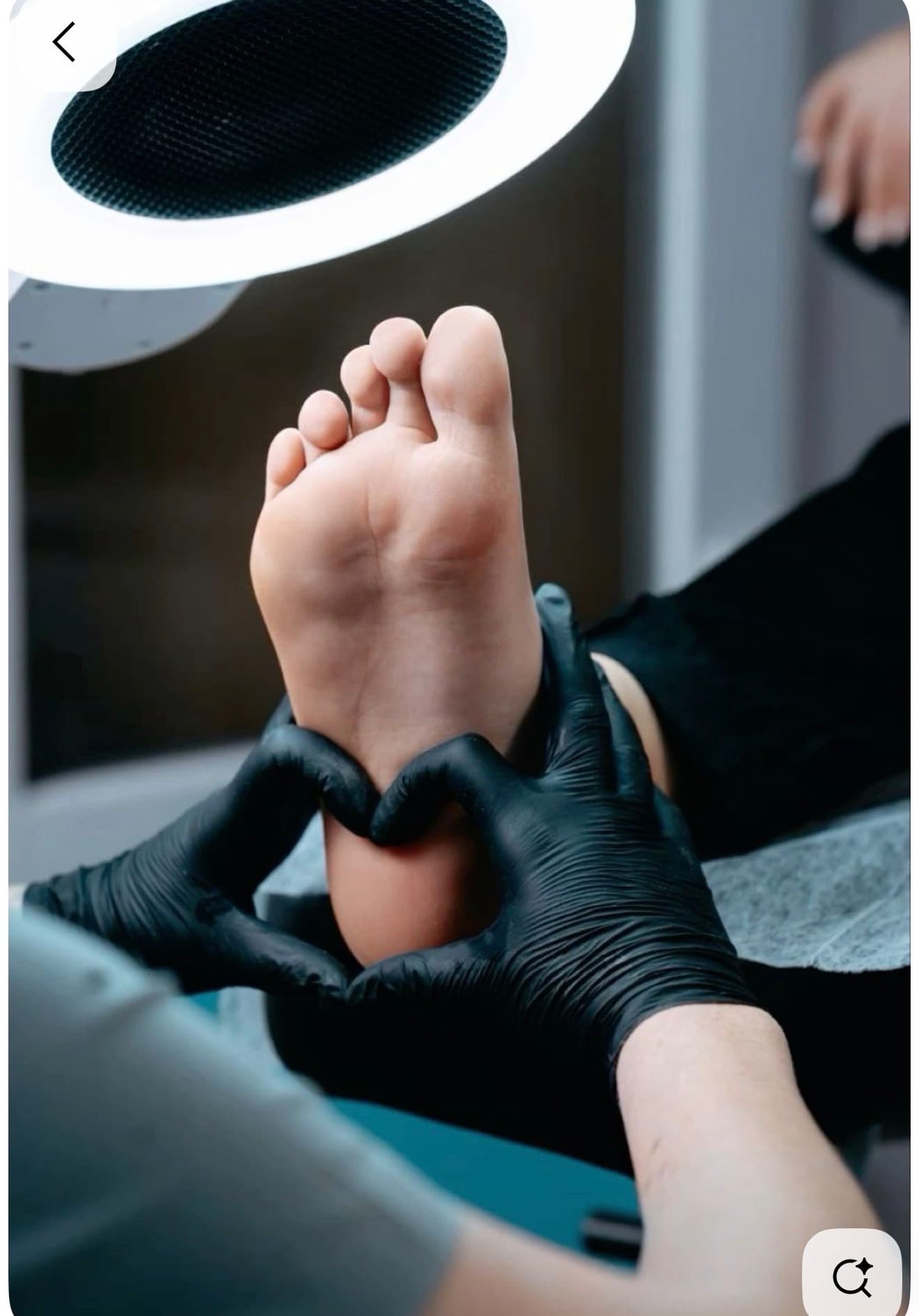
New Client Foot Health Exam & Med-Charting
A complete medical foot health assessment with nursing charting and a personalized care plan. Insurance-friendly and may be tax-deductible.
Questions
Plantar warts — common questions
- How can I tell a plantar wart from a callus?
- A wart usually hurts more when pinched from the sides than when pressed straight down, and often shows tiny dark dots — the ends of small blood vessels. A callus is uniformly thickened skin and hurts under direct pressure. If you're unsure, have it looked at rather than treating it blind.
- Are plantar warts contagious?
- Yes — through direct contact and damp shared surfaces. Cover the area in shared change rooms and pools, avoid sharing towels, and don't pick at it, which can spread it to other parts of your own foot.
Not sure if this is what you have?
That’s what an assessment is for. Karilee Slubowski, LPNwill tell you what you’re actually dealing with — including when the answer is that you should see your physician instead.
Related: Fungal toenails, Heel pain, Ingrown toenails